

 Nederlands
Drawing
Pastel pencils and pastel chalk

What are pastel pencils?
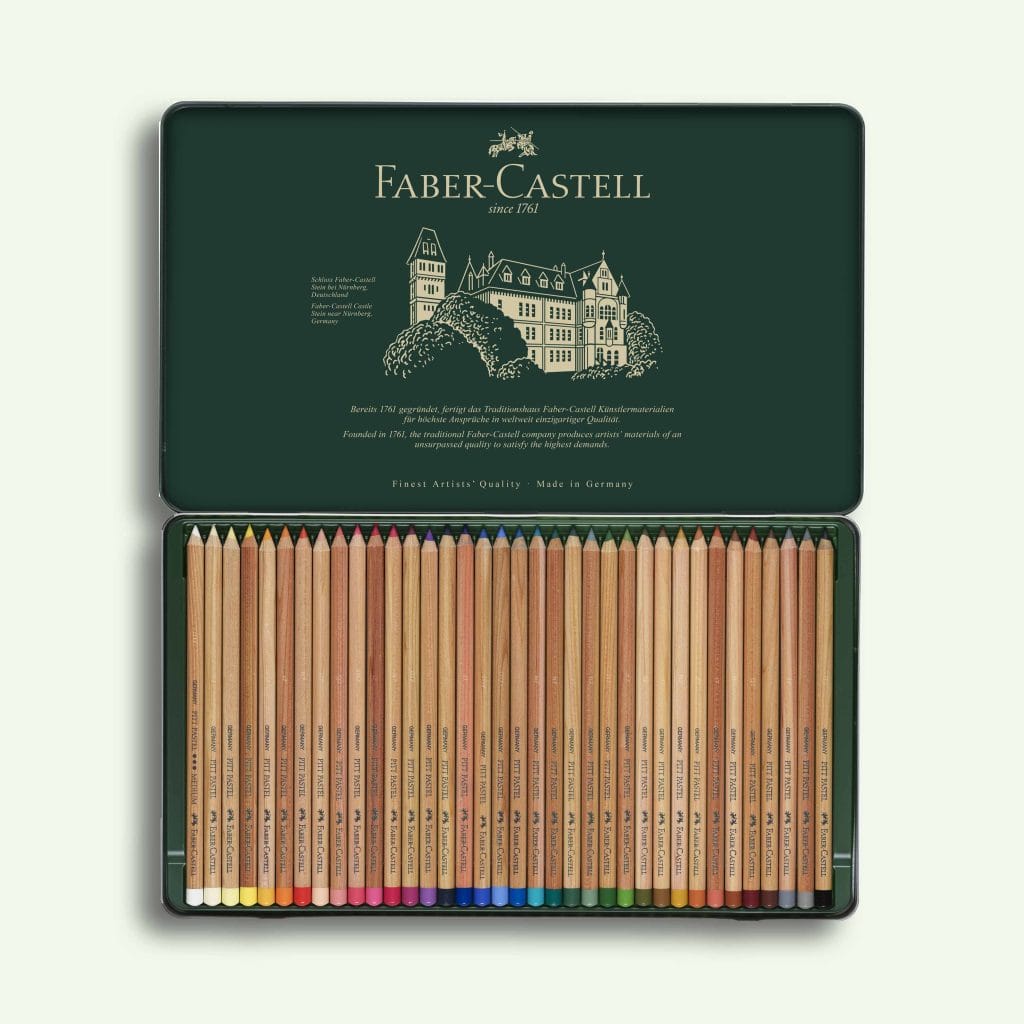
Pastel pencils and coloured pencils look very similar, but they work completely differently.
Pastel pencils are very soft pencils. The core of these pencils contains a soft pastel, so the content is powdery.
There is no oil or wax in them. The coulor pigments are pressed together in the form, but due to the lack of a greasy binder, the pencil remains quite fragile.
Pastel pencils therefore work the same as pastel chalk. You apply the coulor to the paper and can then wipe it off. With pastel pencils, you generally work from dark to light, although the other way around is also possible. White pastel pencils, unlike normal pencils, can be applied opaquely.
Pastel pencils can be used in combination with pastel chalk or other types of pencils, but can also be used on their own.
Pastels are available in a wide range of intense coulors. You can easily blend these coulors together to create subtle transitions.
They are suitable for both beginners and advanced artists.
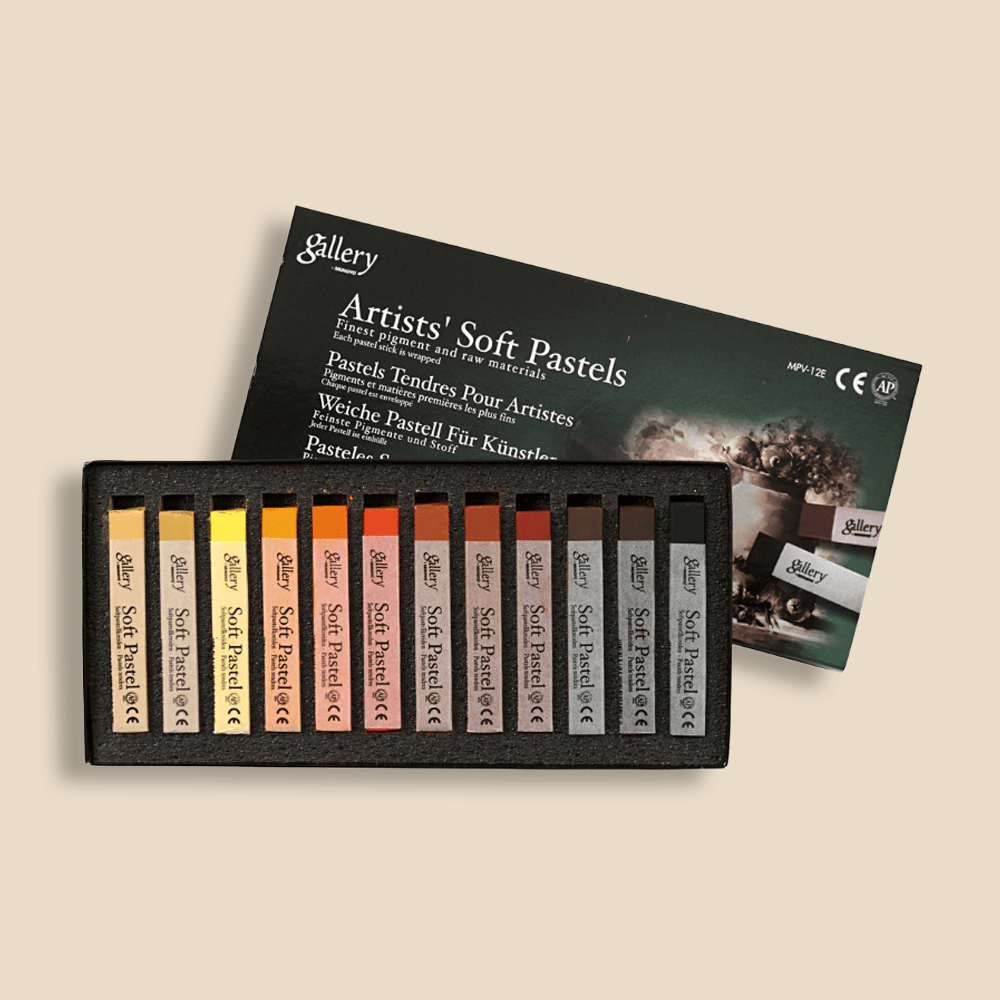
What is pastel chalk?
Soft pastels, also known as pastel chalk, are great fun to work with.
They are available in many different colours (and brands). You can easily blend these colours together to create subtle transitions.
Soft pastels have a lot of pigment and cover well.
Due to their powdery structure, they give off quite a bit. It is therefore important to work carefully and not to wipe your hand over the drawing.
The softness of the material makes it possible to work beautifully and loosely, but this property makes it a little more difficult to work in detail.
If you want to work out certain parts in detail, we advise you to use soft pastels in combination with pastel pencils.
Do you need special paper for pastel?
In principle, any surface can be used, provided it has sufficient surface structure.
Paper is usually used.
The pastel powder sticks to the fibres of the paper, as it were, because pastel does not contain a binder to adhere to the surface.
In order to be able to apply a lot of colour, the paper must therefore have a certain structure/roughness. Smooth drawing paper will not hold enough pastel.
Pastel paper is specially designed for this so that you can build up your creation in multiple layers.
It is available in many different textures, colours, weights and brands.
By using tinted paper you can create subtle effects. For example, the colour of the paper can provide contrast to the pastel or provide harmony.
When using other flexible surfaces such as textiles, it is important that the painting is framed in such a way that the surface cannot move. Vibrations can loosen the pastel particles.
Buy pastel pencils and chalk on 3DForma.nl